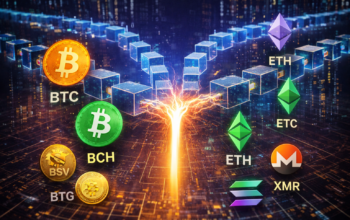
Governance is a critical aspect of blockchain networks, defining how decisions are made, changes are implemented, and the direction of the ecosystem is determined. When a hard fork occurs in a blockchain network, it can significantly impact the existing governance structure. In this article, we will explore how a hard fork impacts the governance structure of a blockchain network and examine the key factors that influence this transformation.
Understanding Governance in Blockchain Networks
Governance in blockchain networks refers to the processes, mechanisms, and actors involved in decision-making and protocol updates. Decentralized governance is a defining characteristic of many blockchain systems, ensuring that no single entity or group of participants has full control over the network. Various stakeholders, including developers, miners, node operators, and token holders, contribute to the governance process through voting, signaling, and other forms of consensus.
The Impact of a Hard Fork on Governance
Governance Split: One of the primary impacts of a hard fork on the governance structure of a blockchain network is the potential split in governance. As a hard fork results in the creation of a new chain with its own set of rules, there is a possibility of a divergence in governance approaches between the two chains. Different communities may have varying views on protocol changes, development priorities, and the overall direction of the network, leading to competing governance models.
Community Fragmentation: A hard fork can lead to community fragmentation, where different factions within the community support different chains. Each chain may have its own governance structures and decision-making processes. This fragmentation can dilute the collective power and influence of the community, potentially reducing decentralization and hindering the ability to achieve consensus on governance matters.
Decision-Making Power Distribution: The introduction of a new chain through a hard fork can alter the distribution of decision-making power within the network. Depending on the level of support from stakeholders, such as developers, miners, and token holders, decision-making authority may shift from the original chain to the new chain or become more concentrated in a particular group. This redistribution of power can influence the future direction of the network and shape its governance.
Governance Conflicts: A hard fork can trigger governance conflicts, where different groups advocate for opposing changes and developments. Disagreements over governance issues, such as block size changes, consensus mechanisms, or network upgrades, can lead to contentious debates and hinder effective decision-making. These conflicts may persist beyond the hard fork, potentially affecting both chains’ governance structures.
Factors Influencing the Impact
Several factors influence how a hard fork impacts the governance structure of a blockchain network. Let’s examine some of the key factors:
Community Consensus: The level of consensus within the community regarding the hard fork plays a crucial role in determining the impact on governance. If the majority of the community agrees on the necessity and direction of the hard fork, it is more likely to lead to a smooth transition and unified governance structures. However, if there is a lack of consensus or if the hard fork is contentious, it can lead to fragmented governance approaches.
Developer Support: The support and involvement of developers in the hard fork are instrumental in shaping the governance structure of the new chain. If a hard fork is supported by a diverse group of developers with varied interests, it is more likely to maintain a decentralized governance model. However, if the hard fork is primarily driven by a single entity or a small group of developers, it may introduce centralization risks in the governance process.
Mining Power Distribution: The distribution of mining power between the two chains can impact governance decisions, particularly in proof-of-work (PoW) blockchains. Miners have significant influence over the governance process, as they play a key role in validating transactions and securing the network. If a significant portion of mining power migrates to the new chain, it can shift the balance of governance power accordingly.
Node Operations: Nodes also play a critical role in the governance of a blockchain network. They are responsible for validating transactions and maintaining the integrity of the blockchain. If a hard fork leads to a significant migration of nodes to the new chain, it can impact the governance structure by potentially centralizing decision-making power among a reduced number of nodes on either chain.
Governance in Non-Contentious Hard Forks
In a non-contentious hard fork, where there is broad consensus and agreement within the community, the impact on governance structures may differ. Non-contentious hard forks are more likely to lead to a smoother transition and a unified governance approach on the new chain. The broad consensus allows for a more cohesive decision-making process and ensures continuity in the governance structure, with stakeholders largely aligned on protocol updates and future development.
Governance in Contentious Hard Forks
In contrast, contentious hard forks can lead to a more significant impact on governance structures. The lack of consensus and potential community fragmentation can result in competing governance models, as different groups advocate for their preferred changes and priorities. This can lead to governance conflicts, with decision-making power becoming distributed between the original chain and the new chain. The two chains may develop separate governance structures, potentially resulting in competing visions for the future of the network.
The impact of a hard fork on the governance structure of a blockchain network depends on various factors, including community consensus, developer support, mining power distribution, and node operations. A hard fork can result in governance split, community fragmentation, changes in decision-making power distribution, and potential governance conflicts. The nature of the hard fork, whether contentious or non-contentious, further influences its impact on governance structures. As blockchain networks continue to evolve, understanding the implications of hard forks on governance becomes crucial for stakeholders to navigate the complexities and challenges that arise during these transformative events.